

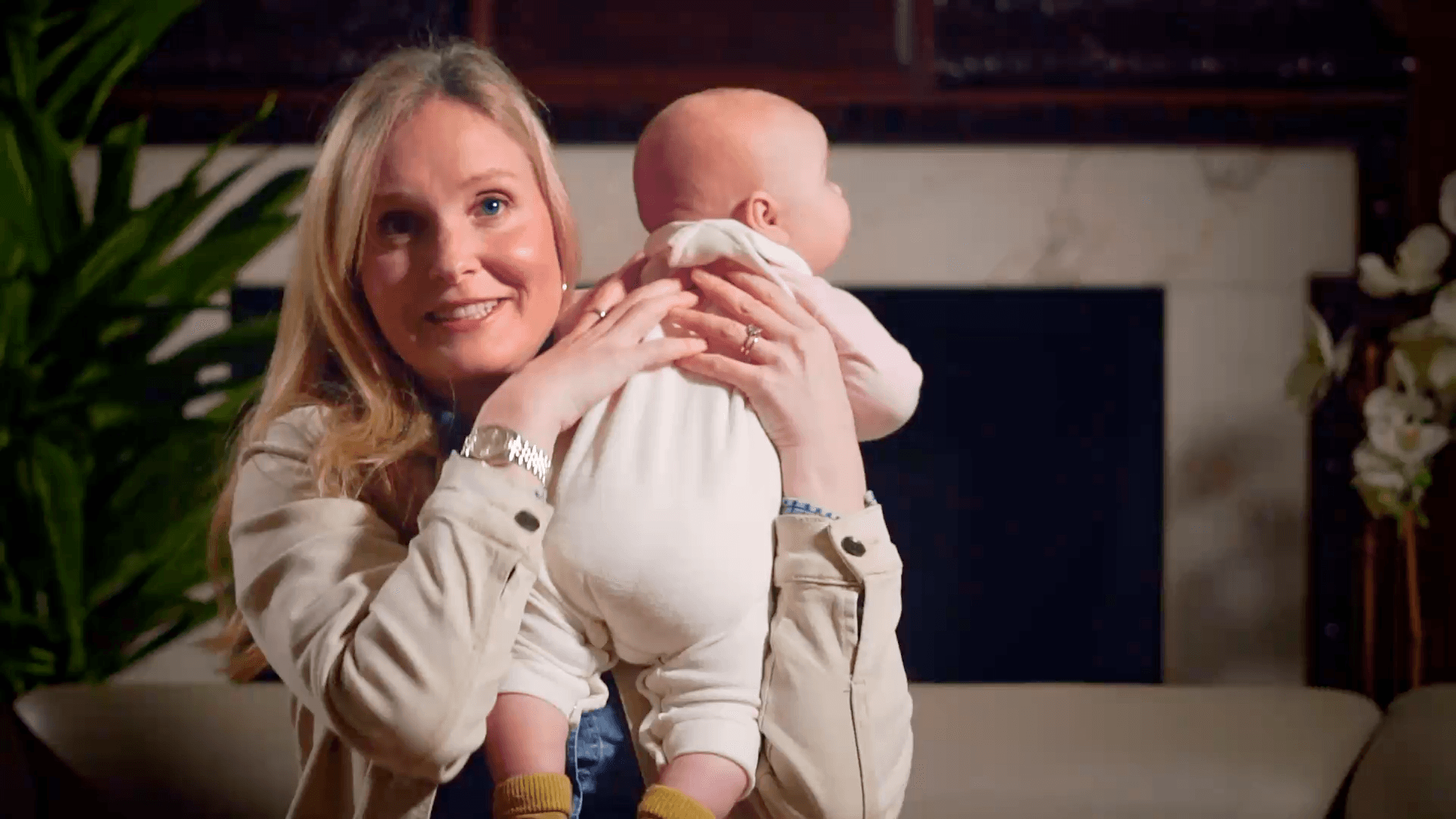
IVF wasn’t working for Marlene and her husband. It was just bad luck, they were told. After being diagnosed with endometriosis, Marlene came to ARGC—and now has two children.
There didn’t seem to be a reason why Marlene and her husband couldn’t have a baby. At least, no-one had told them it wasn’t possible: on paper, they both seemed healthy.
Marlene had always wanted to be a mother. When she got pregnant about a year after getting married, she thought: this is it, I can stop hoping, I’m going to have a child. But it wasn’t to be: she lost the pregnancy due to miscarriage.
She grieved for the baby and the idea she had of how her life would go—get married, fall pregnant. She’d thought this pregnancy would spell an end to the suffering of waiting and hoping to be a parent.
It was after another year and a half of trying to conceive that she and her husband decided to have IVF treatment. This would be the first, but not the last, clinic they’d visit before coming to ARGC.
Initially, Marlene was excited to be seeking help. But then, another devastation: all the embryos from the first round of treatment were abnormal. An abnormal embryo is one that doesn’t have the right genetic material to develop properly.
“We later found out that my husband has high DNA fragmentation [in his sperm],” Marlene shares. This means that the DNA within the sperm is damaged, which can affect the quality of the embryo.
Yet they decided to keep going with treatment. Their next IVF round produced five good, normal embryos. Marlene and her husband celebrated: finally, they thought, we have reached the end of our journey. “We were over the moon,” she says. They scheduled their embryo transfer appointment.
When the first transfer didn’t work out, they thought it was just bad luck. But then the second transfer didn’t take, either–nor did the third, fourth, or fifth. “Each of them was incredibly difficult,” Marlene remembers. “The combination of hope and failure is just heartbreaking and very difficult.
“The reason we were given that it didn’t work out was always that we were unlucky. I think that was the most difficult [thing] for me to accept.”
Then, on a friend’s recommendation, Marlene visited a clinic abroad to get answers. She decided to take a test called ReceptivaDx, which detects endometriosis—a condition where tissue that acts like the lining of the womb grows elsewhere in the body. The test isn’t widely available in the UK.
Marlene’s test was positive; she was diagnosed with endometriosis. That was why embryos kept failing to implant. She hadn’t just been unlucky.
Yet by this point, Marlene and her husband were exploring surrogacy. Another friend suggested they give one more fertility clinic a try before going down that route—and pointed them to ARGC. This was a clinic with good results for tricky cases, Marlene’s friend told her.
Plus, ARGC looks very closely at immunology. Endometriosis is an inflammatory condition, and inflammation is the immune system’s response to threat. “That was a good place for me to start,” says Marlene.
Because nothing had worked for her so far, Marlene was stressed when she first came to ARGC. Yet the clinic’s hands-on approach felt right. Marlene liked the feeling that there was always someone working on her case. At ARGC, scans and blood tests are done daily (sometimes, twice) throughout treatment cycles, to pick up on important changes immediately. Treatment is then adjusted in real time.
Marlene received IVF and immune treatment at ARGC, which aims to help suppress inflammation and improve embryo implantation.
“This ARGC approach of just testing, testing, testing, was reassuring for me,” she says. “I wasn’t left alone.” And the clinic is always open—even on Christmas Day. When Marlene needed to have a pregnancy blood test on a Sunday, we were open and ready for her.
She was nervous before the test. “How will I survive this day if it’s negative?” she thought. But she needn’t have worried: it was positive.
“They told me I’m pregnant,” Marlene recalls. “I remember everything about that moment.” Crying and in disbelief, she kept asking the clinic if they were sure: was it definitely her name on the test? Could they have made a mistake? Yes, they reassured her: you are pregnant.
Marlene’s pregnancy wasn’t completely smooth sailing—there was one scare when her hCG levels weren’t rising as expected, and she had to rush home from Paris for a scan. Thankfully, it ended up being fine. Marlene always felt comfortable that she was in good hands at ARGC, where regular scans and blood tests continue throughout early pregnancy. For people who have immune treatment, this usually carries on until around the 20 week-mark.
Months later, Marlene gave birth to Gustav, a healthy baby boy. Finally, he was here. Her waiting, her hoping—it was over. She was a mother.
Marlene then came back to ARGC for another round of IVF. Soon enough, she welcomed her daughter, Allegra. Gustav is now two-and-a-half years old, and baby Allegra is three months.
“Becoming a parent is probably the most beautiful and also the most challenging job. But every day I’m just so grateful to have children,” Marlene says. “For a long time, it didn’t look like that was going to happen.”
Wondering whether ARGC is right for you? Our advisory calls are free, no-obligation, and led by someone who can answer your specific questions about treatment, costs, and what to expect. Book a call to get started.

Monica Karpinski is a health and science writer specialising in women's health. She has previously written for Stylist, Reader's Digest, the New Statesman Media Group, and more.

 ‘It’s just bad luck’