


Written by
Monica Karpinski

Medically reviewed by
Kelda Gould
Fertility Nurse • BN in Adult Nursing
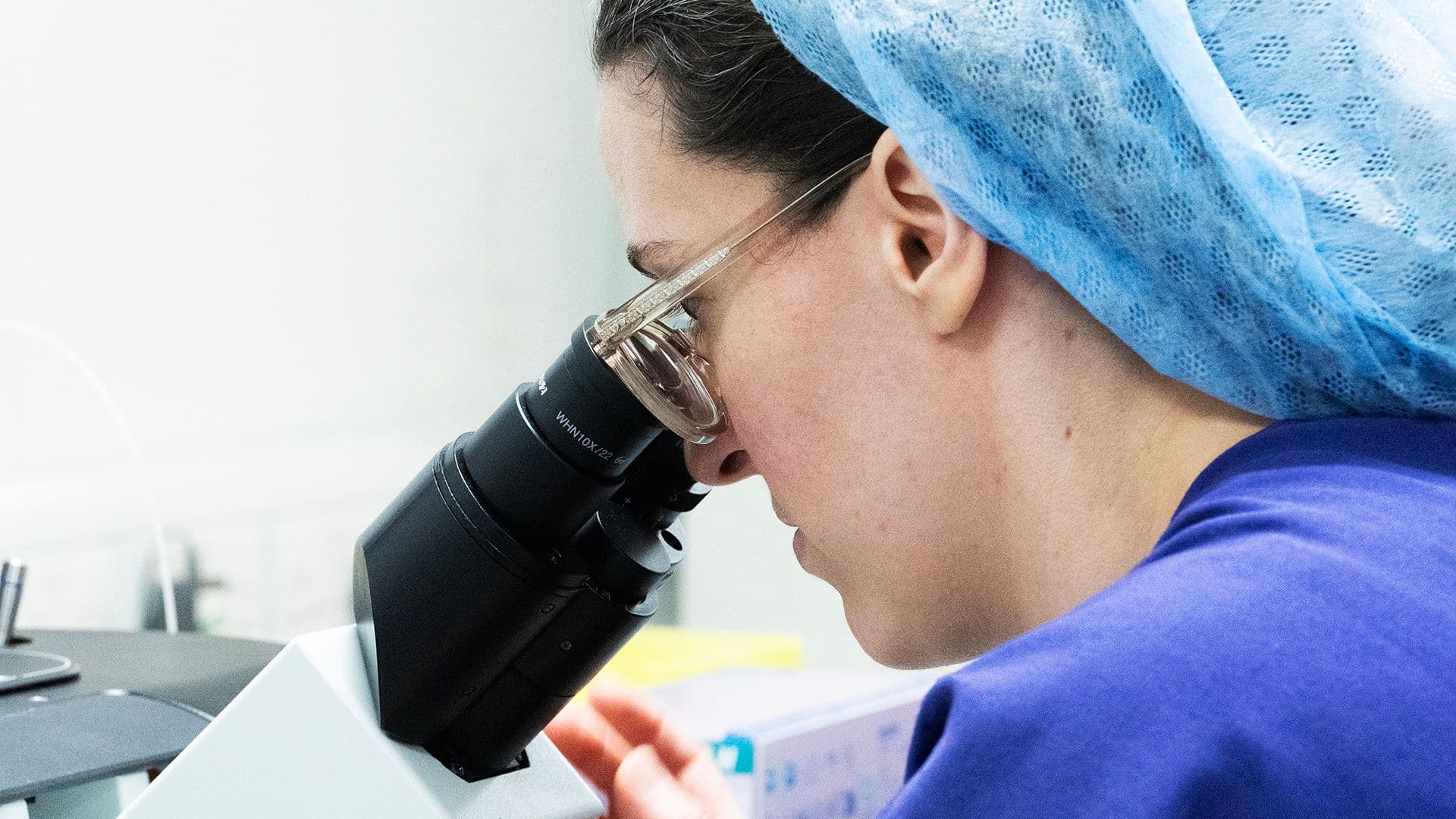
In vitro fertilisation, or IVF, is one of the most well-known fertility treatments in the UK. But what about ICSI, another common treatment?
ICSI stands for intracytoplasmic sperm injection. Like IVF, it involves fertilising an egg in the lab.
Yet it’s the way that the egg is fertilised that sets these two treatments apart. Here’s what to know about ICSI and how it’s different from IVF.
It’s a type of fertility treatment where a single sperm is injected directly into the egg to fertilise it. The sperm is carefully selected from a sample for the injection.
In the UK, ICSI has been around since 1992 as an option to treat male infertility. It’s a way to help fertilisation happen where it might not have been possible naturally (for example, if the sperm couldn’t swim well enough to reach the egg). With this technique, it’s possible to fertilise the egg even with very low sperm counts.
ICSI is actually a highly specialised form of IVF. The clue is in the name: IVF stands for in vitro fertilisation, which means that fertilisation happens in the lab. This is the case for both standard IVF and ICSI.
Here's how ICSI looks under the microscope.
Good to know: At ARGC, we offer use of a device called ZyMot to help with sperm selection for ICSI. It’s designed to replicate the natural selection process that happens in the womb. You could think of it as a kind of filter: only the more mobile, active sperm can pass through.
IVF is fertility treatment where eggs and sperm are fertilised in the lab. The embryo that develops is then transferred into the womb.
When people talk about IVF, they are usually referring to the typical way that it's done (we’re calling that “traditional IVF” in this article). That is: eggs and sperm are placed together in a lab dish and fertilisation happens naturally. This way, there is a natural selection of which sperm will penetrate the egg.
Generally, IVF is recommended for people who aren’t dealing with male infertility.
Neither IVF or ICSI is “better” than the other. They’re each suited to different people in particular circumstances, and come with their own pros and cons.
We’ve already touched on this: ICSI is typically suggested if you’re dealing with male infertility. This accounts for up to 30% of infertility cases in opposite-sex couples.
Usually, male factor infertility refers to problems with sperm. For example:
Any of these factors can affect the sperm’s ability to fertilise an egg, and ICSI offers a way around that. You could think of the injection as being like a helping hand: it gets the sperm into the egg where it might not have been able to do that on its own.
ICSI is also often recommended when using frozen sperm. This is because the freezing and thawing process can affect sperm health, including their quality and how well they move.
With some fertility problems, like if there’s no sperm present in ejaculate (azoospermia), sperm can be removed surgically from the testicles and used in IVF. ICSI might be suggested in these cases, too.
Finally, ICSI may be considered if you had a very low fertilisation rate in previous IVF cycles.
Both ICSI and IVF have similar success rates. Which is why the UK regulator, the Human Fertilisation and Embryology Authority (HFEA), doesn’t publish separate statistics for these two methods.
Here, it’s worth noting that fertilisation isn’t the only factor that plays into success. The age of the person who grew the eggs and egg quality also make a difference, for example.
The main, and most important, benefit of ICSI is that it can help treat male infertility. It offers a possible solution for when the sperm wouldn’t have been able to fertilise the egg on its own.
ICSI generally isn’t recommended if male infertility isn’t a problem for you. However, there are exceptions—it might be suitable for some people who have had very low fertilisation rates in a previous IVF cycle, for instance. Your doctor will confirm what’s best for you personally.
________________________________________
ARGC's clinical experts can answer your questions about fertility treatment, costs, and what to expect. Our advisory calls are free and come with no obligation. Book a call to get started.
For people going through ICSI, there’s no extra physical risks or side effects compared to traditional IVF. The procedure is done in the lab.
But ICSI does come with slightly more risk for the eggs and resulting embryos, because there is a small chance that the injection could damage the egg.
There is also a very small increased risk of birth defects in babies born via ICSI compared to traditional IVF. Though this is extremely rare.
This is something your doctor will decide. We would only recommend ICSI in specific situations: it’s not something you would just choose.
Sperm health is the main deciding factor. At our clinic, we assess the sperm closely: looking at sperm count, how well sperm moves, and its shape. We can also offer a specific test to check whether there is any DNA damage.
We will also review:
We’ll do this before your IVF treatment cycle starts so that we can build a plan tailored precisely to you.
Remember that success rates are comparable for both ICSI and IVF. One isn’t “better” than the other: they are separate methods that are best suited to different types of people.
Male infertility can be treatable. And with the right clinic in your corner, you’ll be able to understand your options and decide on the best route forward.
Here at ARGC, we’re known for taking on a wide range of cases, including those considered complex. Whatever your situation, we will give clear, honest guidance and do what we can to help you. We’ll support you at every step.
Fertility Nurse • BN in Adult Nursing
Kelda Gould is a Registered Nurse specialising in fertility care. She holds a degree in Biochemistry and has over a decade of clinical experience spanning general nursing, outpatients, first response, and fertility care.

 What is ICSI?